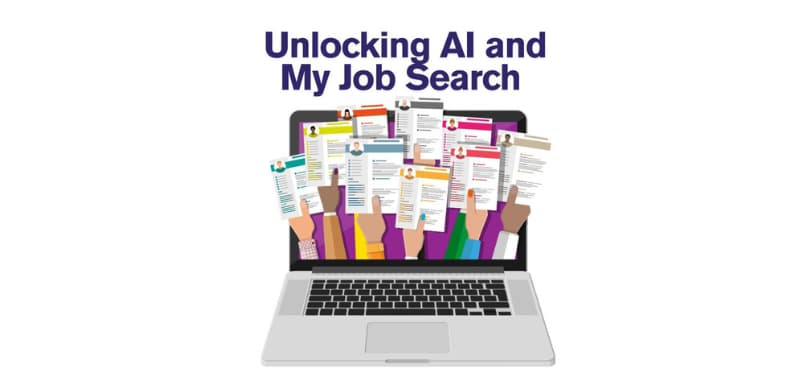
Unlocking AI and My Job Search
“This market is tough, but with AI, it’s even tougher” Yes! But… What does that actually mean? Is there anything you can do about it?
We’d like to help in demystifying that statement. Elevate(Her) is here to help demystify that statement.
There are a few parts to this:
1- Resume screening 2- Applications Volume 3- AI/LLM Skills 4- Software Engineers and AI
Here are more details, and more importantly - tips to navigate your job search.
“The AI didn’t like my resume”
Actually, Applicant Tracking Systems (ATS) aren't typically powered by advanced AI - they’re more like efficient resume parsers using keyword matching, Boolean logic, and heuristics to filter candidates quickly. Over 90% of employers now use some form of automated system to rank or screen resumes. Those who don’t, rely on a recruiter to scan resumes manually. Most take no more than 20 seconds to check for key skills and words. There are many tools out there that help job seekers tailor resumes by comparing them to job descriptions and identifying missing keywords or formatting issues.
Tips:
- Mirror exact terminology from job descriptions - for example, include both the full term ("large language models") and its acronym ("LLM").
- Format your resume in a clean, linear layout: avoid tables, graphics, nonstandard fonts, or headers/footers that confuse parsers. We have a great template to share - simply message Shira here and she’ll send it over.
- There are various ATS-checker tools out there that scan your resume before submission to ensure it passes parsing and includes prioritized keywords.
Volume – AI Tools Fuel an Applicant Tsunami
AI tools like ChatGPT and auto-apply bots have dramatically boosted application volume. LinkedIn reports a 45% increase in applications year-over-year, now reaching an astonishing 11,000 applications per minute. This deluge, often termed an “applicant tsunami,” has made response rates plummet and contributes to overwhelm among recruiters.
Tips:
- Tailor each application and consider adding a personalized outreach message to a hiring manager or recruiter to stand out.
- Network and seek referrals - these go a long way in breaking through high-volume stacks where AI-powered bulk submissions flood inboxes.
Skills – “AI/LLM Experience” Is Now Common in Job Ads
Requesting experience with “AI” or “LLMs” is increasingly prevalent - even in roles outside core machine learning. Sometimes it’s unclear what kind of experience they’re looking for, or how relevant it is for the role, if at all. Making an educated guess on what type of experience exactly is needed will be a first step.
Tips:
- Highlight transferable skills like API integration, scripting, and data pipeline design if direct LLM experience is needed.
- If this is a coding gig, try using Cursor, Co-Pilot or Claude Code. Those are great in-line coding tools that can really help you with accelerating tasks. More on those in the next section.
- Apply anyway. In a lot of those jobs, being a really good prompt engineer is enough. You’re not sure how to be one? Ask ChatGPT or Claude.
With AI, Which Software Engineers Should We Hire?
With the rapid adoption of AI-powered inline coding tools accelerating day-to-day development, companies are soon to be reevaluating what “experience” means. It’s not just about seniority or years on the job but about hiring engineers who grasp the bigger technical picture - those who understand software architecture, system design, and how individual pieces of code fit cohesively into a maintainable, scalable whole. While AI can speed up routine coding tasks, it can also encourage fragmented or short-term solutions that accumulate technical debt if not carefully managed. When I hear companies boast about how many lines of codes were written by AI, my head immediately goes to - how’s your tech debt then?
Tips:
- Highlight any experience with architectural planning and system design.
- Emphasize your ability to write code that fits within a broader, maintainable framework rather than quick fixes.
- Demonstrate collaboration skills that promote shared code ownership and technical standards.
- Showcase examples where you’ve successfully balanced speed with code quality and long-term maintainability.
We hope these tips help! Check out our career advising services here - we’ll be happy to support you in this new-world journey.